|
|
|
Corporate Social Responsibility can
build a Prosperous Business |
|
|
|
|
|
|
|||||
|
|
|
|
|
||||
|
|
|
|
|
||||
|
|
|
|
|
||||
CSR Initiatives: JAL Amrit
|
|
|
|
|
|
||||||||||||||||||
|
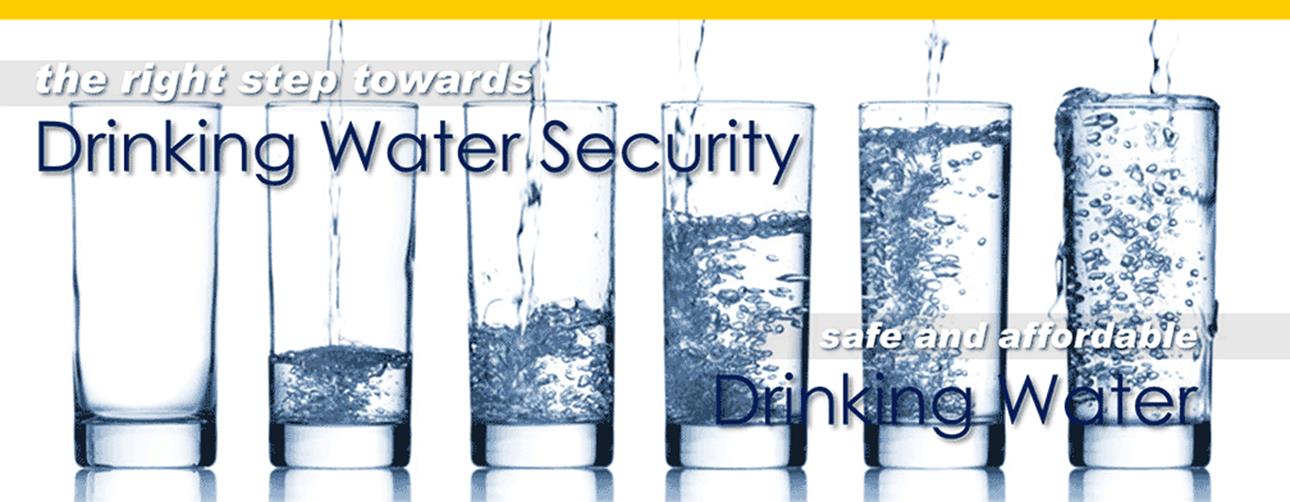
Objective of the JAL Amrit To provide sustainably access to safe and
affordable drinking
water while fostering economic vitality and enhanced quality of
life of marginalized communities living in rural areas and urban slums. |
|
||||||||||||||||||
|
Vision Statement |
Mission Statement |
||||||||||||||||||
|
To sustainably provide WHO Standards
quality drinking water to all and enriches local economies. |
|
||||||||||||||||||
|
Together
with our corporate sponsors we can address affordable, safe water access,
identify opportunities to advance these solutions and foster best practices. |
JAL Amrit |
||||||||||||||||||
|
What Drinking Water Security Means Every rural person has adequate safe water for drinking
and cooking on a sustainable basis. Safe potable water should be readily and
conveniently accessible at all times and in all situations. What Drinking Water Security Involves
JAL Amrit Highlight
Why JAL Amrit The World Health Organization (WHO) reports
that India accounts for 21 percent of the world’s global burden of disease.24
WHO estimates that, in India, about ~38 m people are affected by waterborne
diseases every year, of which over 75% are children; 780,000 deaths are
attributable to contaminated water and more than 400,000 are attributed to
diarrhea alone. This also generates an economic cost for the country. This
was last estimated at INR 4,078 Crores (US$600 million) annually as almost 73
million working days are lost due to waterborne disease each year. Notably,
India ranked a low 120th out of 122 nations for its water quality and 133rd
out of 180 nations for its water availability. The most common waterborne
diseases in India are diarrhea, enteric fever, and cholera. Acute Diarrheal
Disease (ADD) is the most common waterborne disease across India. Globally,
diarrhea is the second leading cause of death in children under five years
old with around 760,000 deaths attributed to it annually. In 2009, there were
around 12 million reported cases of ADD and about 1,800 deaths in India
directly linked to ADD. The rationale for safe drinking water becomes even
stronger when the health issues and their economic burden on rural households
are considered. Rural consumers who understand the health benefits of safe
water are usually willing to switch to safe water sooner to avoid
health-related costs. Why JAL Amrit Is Not Just Water Reach - JAL Amrit serving the marginalized
communities living in remote rural areas and urban slums. Income Generation and Entrepreneurship
- JAL Amrit offering income generation opportunities to local entrepreneurs
and communities. Employment and Job Creation - JAL Amrit promoting women empowerment by
creating livelihood opportunities and new jobs for economically disadvantaged
local women across the value chain. Health Impact - Reduction in water borne diseases like
stomach ailments and diarrhea, enabling people to live health and full life. Reducing
the family healthcare expenses and increasing the family income as increase
in the number of working days. Environmental Impact - Zero effluent generated, no waste of water,
recharging underground aquifers, promoting flora and fauna cultivation and
soil protection. Projected Impact - With the support sponsor companies JAL Amrit
aims to have a positive impact on the health and livelihoods millions of
people living in remote rural areas and urban slums, contribute to the GDP of
the country and enabling sponsor companies achieve Water Positive Status or a
ZERO Water Footprint. |
Naireeta Services Private
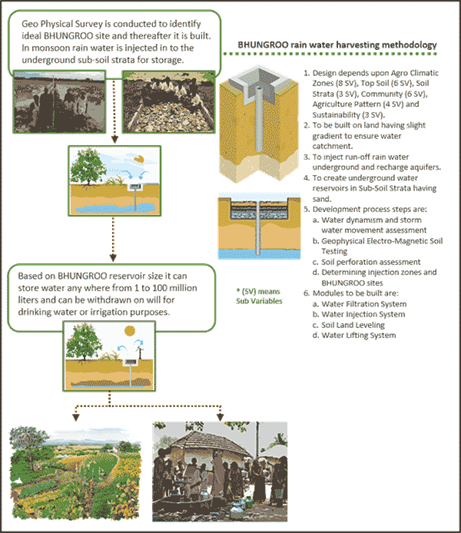
Limited (NSPL), NSPL has developed an innovative Water Harvesting-cum-Management Technology called BHUNGROO. BHUNGROO
is an award winning rain water harvesting solution which enables
runoff water to be conserved and injected underground in an induced natural
reservoir. BHUNGROO is a water management system that injects
and stores excess rainfall underground and lifts it out for use in dry
spells. The massive underground reservoir can hold as much as 100 million
liters of rain water. It harvests water for about 10 days per year and can
supply water for as long as seven months to be used for agriculture and
drinking purpose. BHUNGROO is a climate change mitigation solution
that can alleviate natural disasters caused by flash floods and drought while
also improving soil salinity by applying physics principles of low v/s high
density equilibrium. BHUNGROO ensures water for irrigation, guarantees
food security, and enhances livelihood; it also ensures water logging
solution, soil erosion control, drought resilience, cultivation period
extension, better crop yield, cropping intensity, and livestock rearing.
BHUNGROO
started in 2006. Since then it has reached over 3500 units in India
and abroad. Under WCL and SHG Programmes built 2400 units empowering
over 20,000 women enabling them gain food security for 100,000
family members collectively. BHUNGROO has been successfully
implemented in over 200 drought affected regions in Patan
District of Gujarat. It has also been successfully implemented in other
States of India like Bihar, Uttar Pradesh, Maharashtra, Karnataka, Jharkhand
and Odisha.
|
||||||||||||||||||
|
|
|
||||||||||||||||||


|
|
|
|
|
|
|
|
|
|
|
|
|
|
|
|
|
|
||||
|
|
|
|
|
|
|||||
|
|
|
|
|
|
|||||
|
|
|
|
|
|
|||||
|
|
|
|
|
|
|
|
|
||
|
|
|
|
|
|
Copyright
@2016 Saraswati Aastha Trust. All rights reserved |
|
|
|
|
|
|
|
|
|
|
|
|
|
|
|